Bearded Dragon Tank Setup: Size, Heat, and UVB Checklist
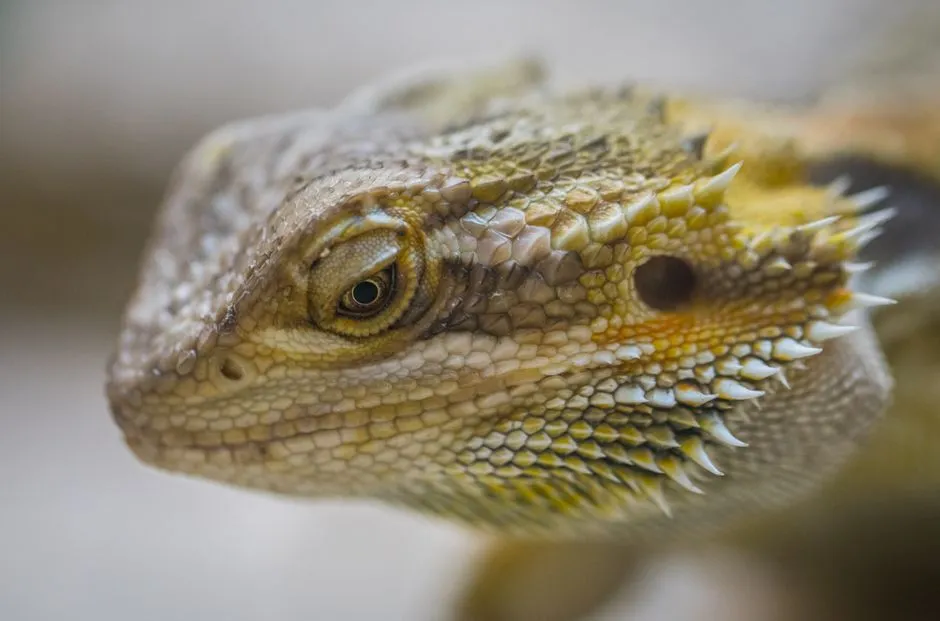
- What a Bearded Dragon Tank Setup Needs
- Bearded Dragon Tank Size: How Big Is Big Enough?
- Heat: Building the Temperature Gradient
- UVB: The Part You Cannot Skip
- Bearded Dragon Substrate Options
- Furnishing the Tank: What Goes Inside
- Setup Checklist: Order of Operations
- When to Call a Vet Instead of Adjusting the Tank
What a Bearded Dragon Tank Setup Needs
A proper bearded dragon tank setup has six non-negotiable parts: an enclosure of roughly 120 gallons (about 4 ft x 2 ft x 2 ft) for an adult, a basking zone with a surface temperature in the 95–110°F range, a cool side around 75–85°F, a linear T5 high-output UVB tube covering part of the enclosure, a safe substrate, and décor that lets the dragon climb, hide, and thermoregulate. Get those six right and you have solved most of the problems that send bearded dragons to the vet.
Central bearded dragons (Pogona vitticeps) come from hot, dry, sun-drenched habitat in inland Australia. Every number in this guide exists to recreate a small slice of that environment indoors — and every number is specific to this species. A setup that keeps a bearded dragon thriving would be dangerously wrong for a leopard gecko, so never carry these figures over to another animal.
This is a checklist-style walkthrough. Work through it in order: size, heat, UVB, substrate, furnishings, then the finishing details most new keepers miss.
Bearded Dragon Tank Size: How Big Is Big Enough?
The modern standard for an adult bearded dragon is a 120-gallon enclosure, typically 4 ft long x 2 ft deep x 2 ft tall. Adults commonly reach 16–24 inches from nose to tail tip, and they are active, ground-roaming lizards that patrol territory in the wild. A 4-foot enclosure gives them room to actually walk, and — just as important — enough length to build a true temperature gradient from hot to cool.
You will still see 40-gallon "breeder" tanks sold as bearded dragon kits. Keeping practice has moved on. A 40-breeder can work as a temporary grow-out enclosure for a small juvenile, but it is too small for an adult to live in comfortably, and it is genuinely difficult to fit a safe heat gradient into that footprint.
Quick sizing reference:
| Dragon age/size | Minimum workable | Recommended |
|---|---|---|
| Hatchling to ~10 in | 40-gallon breeder (temporary) | 4x2x2 ft with adjusted basking distances |
| Subadult and adult | 75 gallons (absolute floor) | 120 gallons (4x2x2 ft) or larger |
Two practical notes:
- You can raise a hatchling in an adult-sized enclosure. The old claim that big tanks stress babies is manageable with dense clutter — plants, hides, and cover. Buying one enclosure once is cheaper than buying two.
- Front-opening PVC or wood enclosures beat glass aquariums for most keepers: they hold heat better, open from the front (less stressful than being grabbed from above, which mimics a predator), and handle a 4-foot UVB fixture cleanly. Glass works; it is just harder to heat efficiently.
Bigger is always better here. There is no such thing as a bearded dragon enclosure that is "too large" once it is properly furnished.
Heat: Building the Temperature Gradient
Bearded dragons are ectotherms — they run their metabolism on external heat and must move between warm and cool zones to regulate body temperature. Your job is not to make the whole tank one temperature. It is to build a gradient: hot at one end, comfortable at the other.
Target temperatures
| Zone | Target range |
|---|---|
| Basking surface (adults) | 95–105°F (35–40°C) |
| Basking surface (hatchlings/juveniles) | 100–110°F (38–43°C) |
| Warm side ambient | 85–95°F (29–35°C) |
| Cool side ambient | 75–85°F (24–29°C) |
| Nighttime low | Mid-60s to low 70s°F is fine for healthy adults |
These are honest ranges, not single magic numbers — sources vary within them, and individual dragons show you their preference by how they use the space. What matters is that the basking surface is hot enough for digestion, the cool end offers real relief, and nothing in the enclosure can burn the animal.
How to deliver the heat
- Use halogen or incandescent flood bulbs for basking. Bearded dragons associate heat with bright overhead light, as they would with the sun. A cluster of two lower-wattage flood bulbs over one basking platform heats the whole animal more evenly than a single intense spot.
- Put every heat source on a thermostat or dimmer. An unregulated bulb in a small enclosure can push a basking surface far past safe temperatures. A dimming thermostat is the standard tool for light-emitting heat.
- Measure, don't guess. Check basking surface temperature with an infrared temp gun and ambient temperatures with digital probe thermometers at both ends. Analog stick-on dials are not accurate enough to trust with an animal's health.
- Skip heat rocks entirely. They are a well-documented burn hazard. Heat mats are also largely useless for this species — bearded dragons absorb heat from above.
- Turn heat lamps off at night. Healthy adults tolerate typical household nighttime temperatures well. If your room drops below the mid-60s°F, a ceramic heat emitter or deep heat projector on a thermostat adds heat without light. Never use colored "night" bulbs — dragons can perceive the light, and it disrupts their sleep.
Basking distance and platform
Give the dragon a raised basking platform — a flat piece of slate, a sturdy branch, or a stone hide roof — positioned so its back sits at the correct distance from both the heat bulb and the UVB tube. Raising the platform lets you hit target temperatures with lower-wattage bulbs, and slate holds and radiates belly heat, which aids digestion.
UVB: The Part You Cannot Skip
Bearded dragons require high-output UVB lighting to synthesize vitamin D3 and absorb calcium. Without it, they develop metabolic bone disease — a progressive, painful, and ultimately fatal condition that remains one of the most common preventable illnesses in captive dragons.
The checklist version:
- Fixture type: a linear T5 high-output fluorescent tube in a reflector fixture. The usual choices are tubes sold as 10.0 or 12% "desert" strength. Compact coil bulbs and cheap kit bulbs do not produce adequate UVB across a large enclosure — treat them as inadequate for this species.
- Coverage: the tube should span roughly half to two-thirds of the enclosure length, positioned over the basking side so the dragon gets heat and UVB in the same spot, with the cool side offering shade.
- Distance: manufacturer guidance varies by tube and mounting, but a common ballpark for a T5 HO desert tube is a basking surface about 12–18 inches below an unobstructed tube — closer if the light must pass through a mesh screen top, which can block a substantial share of UVB output. Follow the specific manufacturer's distance chart for your tube, and verify with a solarmeter if you want certainty.
- Replacement: UVB output decays long before the visible light dies. Replace tubes on the manufacturer's schedule — commonly every 6–12 months depending on the product.
- Glass and plastic block UVB. A tube shining through an aquarium lid or a sunny window does nothing. The light path from tube to dragon must be open air or mesh.
UVB is the single most misunderstood piece of reptile equipment, and the details — Ferguson zones, meter readings, mesh attenuation, why some species need far less than a bearded dragon — deserve their own deep dive. Our guide to UVB lighting for reptiles covers all of it species by species.
Alongside UVB, run a bright 6500K LED or fluorescent daylight lamp across the enclosure. Bearded dragons are intensely sun-adapted; bright light supports natural activity and appetite. Keep all lights on a timer with a 12–14 hour day cycle.
Bearded Dragon Substrate Options
Substrate is the most argued-about topic in bearded dragon keeping. Here is an honest comparison:
| Substrate | Verdict | Notes |
|---|---|---|
| Ceramic or slate tile | Safe, easy | Holds heat, easy to disinfect, no impaction risk. Visually plain. |
| Paper towel / butcher paper | Safe, best for quarantine and juveniles | Cheap, replace often. Not naturalistic. |
| Non-adhesive shelf liner | Safe, easy | Similar to tile in practice. |
| Bioactive or naturalistic soil/sand mix | Good for experienced keepers | A firm, dug-in mix (often organic topsoil with washed play sand) allows natural digging. Requires research and correct feeding practice. |
| Calcium sand ("calci-sand") | Avoid | Marketed as digestible; clumps when wet and is associated with impaction. |
| Crushed walnut shell | Avoid | Sharp, indigestible fragments. |
| Reptile carpet | Not recommended | Snags claws and teeth, harbors bacteria, hard to truly clean. |
The short version: tile or paper for simplicity, a properly mixed soil/sand blend for naturalism, and never loose calcium sand or walnut shell. If you use any loose substrate, feed insects from a dish or feeding tongs to minimize how much gets swallowed, and make sure husbandry (heat, hydration, UVB) is dialed in — most impaction cases trace back to poor temperatures impairing digestion, not substrate alone.
Humidity target for this species is roughly 30–40% — normal dry household air usually lands there. Measure with a digital hygrometer; persistent high humidity in a dragon enclosure invites respiratory trouble.
Furnishing the Tank: What Goes Inside
A bare tank stresses dragons. Furnish with purpose:
- Basking platform under the heat/UVB zone (slate, branch, or stone hide).
- At least one snug hide on the cool side where the animal can fully conceal itself.
- Climbing branch or hammock — bearded dragons are semi-arboreal as juveniles and appreciate elevation.
- Shaded cover — plants (live or artificial) breaking up sightlines, especially important for young dragons in large enclosures.
- A shallow water dish on the cool side, sized so the dragon can't fully submerge. Many dragons rarely drink standing water; they hydrate from food and occasional baths, but the dish should still be there and kept clean.
- Food dish for salads and dusted insects, kept away from loose substrate.
Avoid anything with sharp edges, unstable stacked rock (dragons dig and can be crushed), and cedar or pine wood, whose aromatic oils are associated with irritation in reptiles.
Setup Checklist: Order of Operations
- Buy and place the enclosure (4x2x2 ft or larger) away from drafts and direct sunlight.
- Install the T5 HO UVB tube and daylight lamp over the basking side, on a timer.
- Install the halogen basking bulb(s) on a dimming thermostat.
- Lay substrate and arrange the basking platform, hides, and climbing décor.
- Run the empty enclosure for several days. Measure basking surface, warm ambient, cool ambient, and humidity until every number sits in range without your intervention.
- Only then bring the dragon home — and give it a quiet week to settle before heavy handling.
That "run it empty first" step is the one most new keepers skip and most experienced keepers swear by. Dialing in temperatures with an animal already in the enclosure means the animal lives through your mistakes.
When to Call a Vet Instead of Adjusting the Tank
Good husbandry prevents most illness, but it does not treat existing illness. If your dragon shows lethargy beyond normal brumation behavior, a soft or crooked jaw, tremors, swollen limbs, refusal to eat for an extended stretch, or labored breathing, no enclosure tweak fixes that — book an exotic or reptile veterinarian promptly. Metabolic bone disease and respiratory infections are far more treatable early.
Everything above applies to central bearded dragons specifically. Parameters in this guide are honest ranges drawn from current keeping practice; verify them against your equipment with a digital thermometer, a hygrometer, and ideally a UV meter, because a label's promise and a bulb's real output are frequently different things.