Do Reptiles Need UVB Light? A Species-by-Species Guide
Do Reptiles Need UVB? The Short Answer
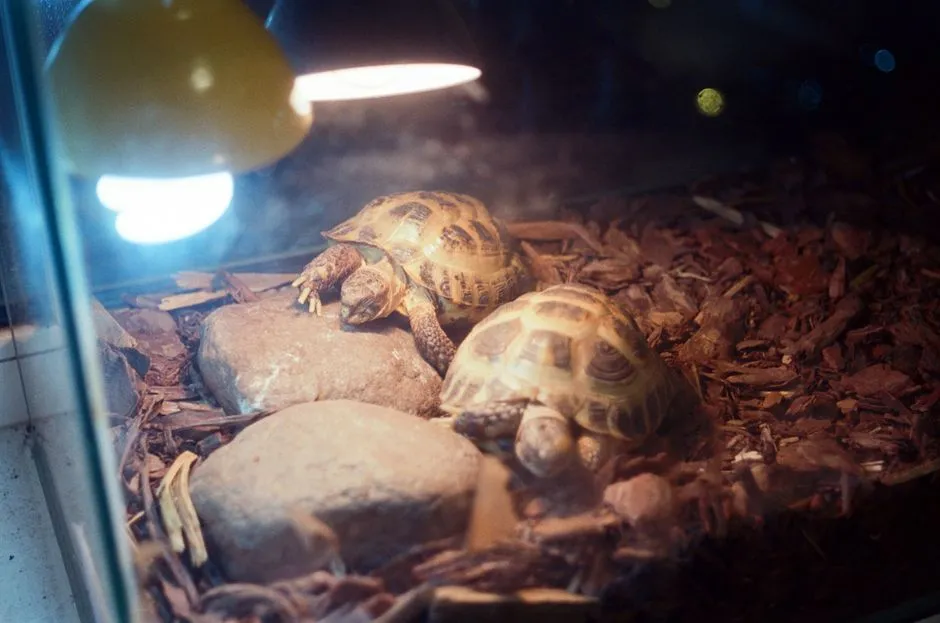
Most diurnal reptiles — bearded dragons, tortoises, aquatic turtles, and other daytime baskers — need UVB lighting to survive in captivity, because UVB is how their bodies make vitamin D3 and absorb calcium. Nocturnal and crepuscular species such as leopard geckos and ball pythons can live without it if their diet supplies D3, but current keeping practice increasingly favors giving every reptile access to low-level UVB, because even "optional" species use it when it's offered.
So the honest answer is: UVB is mandatory for some species, strongly beneficial for nearly all of them, and harmful for none — as long as the output matches the species and the bulb is installed correctly. The rest of this guide covers who needs what, how far the bulb should sit from the basking spot, and when to replace it.
What UVB Actually Does for a Reptile
UVB is a band of ultraviolet light (roughly 280–315 nanometers) present in natural sunlight. When it reaches a reptile's skin, it drives the synthesis of vitamin D3, and D3 is what allows the animal to absorb calcium from its food. No UVB and no dietary D3 means no usable calcium — regardless of how much calcium powder is dusted onto feeders.
The failure mode is metabolic bone disease (MBD): the body pulls calcium out of the skeleton, producing soft or rubbery jaws, bowed limbs, kinked tails, tremors, lethargy, and eventually fractures and death. MBD is one of the most common preventable diseases in pet reptiles, and inadequate UVB is a leading cause in basking species.
Two practical points follow from the biology:
- UVB does not pass through glass or plastic. A bulb shining through a terrarium's glass lid, or sunlight through a window, delivers essentially zero usable UVB. The light must reach the animal through open air or mesh.
- Mesh screens block a meaningful share of output — often somewhere between a third and a half, depending on the weave. Mounting position has to account for that.
If your reptile already shows possible MBD signs — a soft jaw, trembling limbs, difficulty walking — that is a veterinary problem, not a lighting tweak. See an exotic or reptile vet promptly; skeletal damage can be halted but not always reversed.
Which Species Need UVB: A Quick Reference
Herpetologists often describe species' UV needs using Ferguson zones, a four-zone scale based on how much sun exposure an animal gets in the wild — from shade-dwelling and crepuscular species (Zone 1) up to open midday baskers (Zone 4). You don't need to memorize the zones, but the underlying idea matters: match the UVB to the lifestyle of the exact species you keep.
| Species | UVB requirement | Notes |
|---|---|---|
| Bearded dragon | Essential | Strong desert basker; a high-output linear tube is non-negotiable |
| Tortoises & aquatic turtles | Essential | Daytime baskers; MBD and shell deformities without UVB |
| Blue tongue skink | Essential | Diurnal forager; needs moderate-to-strong UVB |
| Chameleons (common pet species) | Essential | Highly UVB-dependent; also need careful supplementation |
| Leopard gecko | Optional but recommended | Crepuscular; can rely on dietary D3, benefits from low-level UVB |
| Crested gecko | Optional but recommended | Low-level UVB plus a D3-containing diet is the common approach |
| Ball python | Optional | Whole-prey diet supplies D3; low-level UVB still appears beneficial |
| Corn snake | Optional | Same logic as ball pythons |
This table is a starting point, not a substitute for a species-specific care sheet. A "strong basker" label still leaves open exactly which bulb, at what distance, over what kind of gradient — verify the numbers for your exact species before buying anything.
Do Bearded Dragons Need UVB?
Yes — unambiguously. Bearded dragons are open-desert baskers and among the most UVB-dependent lizards in the hobby. The standard setup is a high-output linear fluorescent tube (T5 HO, typically sold as 10–12% or "desert" strength) spanning roughly half to two-thirds of the enclosure length, positioned so the basking spot sits within the bulb's effective range. Compact coil bulbs are not adequate as a bearded dragon's sole UVB source. For how the UVB tube fits together with basking heat, tank size, and substrate, see our full bearded dragon tank setup checklist.
Do Leopard Geckos Need UVB?
Leopard geckos are the classic "don't need it" species — they're crepuscular, and generations have been raised without UVB using calcium-with-D3 supplementation on their insects. That approach still works.
But "can survive without" is not the same as "doesn't benefit." In the wild, leopard geckos catch low-angle sun at dawn and dusk, and studies and field practice have pushed modern keeping toward offering low-output UVB (a low-percentage tube, a shaded gradient, and hides so the gecko can self-regulate). If you provide UVB, reduce — don't eliminate — dietary D3 in consultation with a species-specific plan. If you skip UVB, D3 supplementation becomes essential rather than optional. Either way, the details live in our leopard gecko care sheet.
Do Ball Pythons Need UVB?
No — ball pythons can be kept healthy without UVB, because whole rodent prey delivers vitamin D3 in the diet. That is the long-standing consensus, and thousands of ball pythons live full lives under nothing but a heat source on a thermostat.
That said, low-level UVB is increasingly offered to ball pythons anyway: they are exposed to some UV in the wild, and keepers report more natural activity cycles under a proper day/night light schedule. If you add it, keep the output low and always provide hides at both ends of the enclosure — for a ball python, secure hiding places and stable humidity matter far more than UV ever will.
Choosing a UVB Bulb: Types Compared
- Linear fluorescent tubes (T5 HO) — the default recommendation for most setups. Even coverage along the enclosure, strong output, widely available in low- and high-output versions. Requires a matching fixture, ideally with a reflector.
- Linear T8 tubes — older, weaker standard. Workable at close range for low-requirement species, but T5 HO is better value for most keepers.
- Compact/coil UVB bulbs — screw into a standard socket, but coverage is a small patch and output is modest. Acceptable only for small enclosures and low-requirement species; not for bearded dragons or other strong baskers.
- Mercury vapor bulbs — produce heat and UVB in one lamp. Convenient, but they can't be dimmed on a thermostat and their UV output can be intense at close range, so they suit large enclosures with generous distance.
Whatever you buy, the goal is a UV gradient: strong exposure at the basking zone tapering to zero in the hides, so the animal chooses its own dose — exactly as it would in sunlight and shade.
How Far Should a UVB Light Be From the Basking Spot?
There is no single correct number, because distance depends on three things: the bulb's output, whether the light passes through mesh, and the species' requirement. As honest working ranges:
- Many T5 HO tubes are designed to sit roughly 10–18 inches (25–45 cm) above the basking surface — closer to the near end of that range when shining through mesh, farther when mounted in open air inside the enclosure.
- Low-output tubes for crepuscular species generally sit closer; high-output and mercury vapor lamps need more distance.
- Too close is a real hazard: excessive UV can cause eye and skin damage (photokeratoconjunctivitis). Too far, and the animal receives effectively nothing.
Two ways to get it right rather than guess:
- Follow the manufacturer's distance chart for your exact bulb model and mounting arrangement — reputable brands publish them.
- Better still, measure with a UV index meter (a Solarmeter-style UVI meter) and match the reading at the basking spot to your species' recommended range.
Raise or lower the basking platform, not just the lamp — décor height is the easiest way to fine-tune exposure.
UVB Bulb Replacement Schedule
This is the mistake that catches experienced keepers: UVB bulbs stop producing useful UVB long before they stop producing visible light. The bulb looks fine; the UV output has quietly collapsed.
As general practice:
- T8 fluorescent tubes: replace roughly every 6 months
- T5 HO tubes: replace roughly every 12 months
- Compact/coil and mercury vapor bulbs: follow the manufacturer's stated lifespan, commonly in the 6–12 month range
Write the install date on the bulb's end cap with a marker, or set a phone reminder. If you own a UVI meter, you can replace based on measured decay instead of the calendar — the only method that's actually precise.
Five UVB Mistakes That Quietly Harm Reptiles
- UVB through glass or plastic. Filters out virtually all of it. The animal gets light, not UVB.
- Keeping a bulb until it burns out. Visible light long outlives UV output; replace on schedule.
- One bulb, every species. A desert-strength tube over a crepuscular gecko with no shade is as wrong as no UVB over a bearded dragon.
- No shade or hides under the lamp. Reptiles self-regulate their dose; an enclosure with no UV-free retreat takes that choice away.
- Skipping D3 supplementation in a no-UVB setup. If a species is kept without UVB, dietary D3 has to fill the gap — confirm the schedule for your exact species.
The Bottom Line
If your reptile basks in daylight, treat UVB as life-support equipment, not an accessory. If it's nocturnal or eats whole prey, UVB is a genuine choice — but a low-level gradient is a gift most species will use. Match the bulb to the species, mount it over mesh-aware distances, replace it before it fades, and let the animal choose its own exposure. And if you ever see the early signs of MBD, skip the forum threads and call an exotic vet — lighting can prevent the disease, but only a veterinarian can treat it.