How Big Should a Lizard Tank Be?
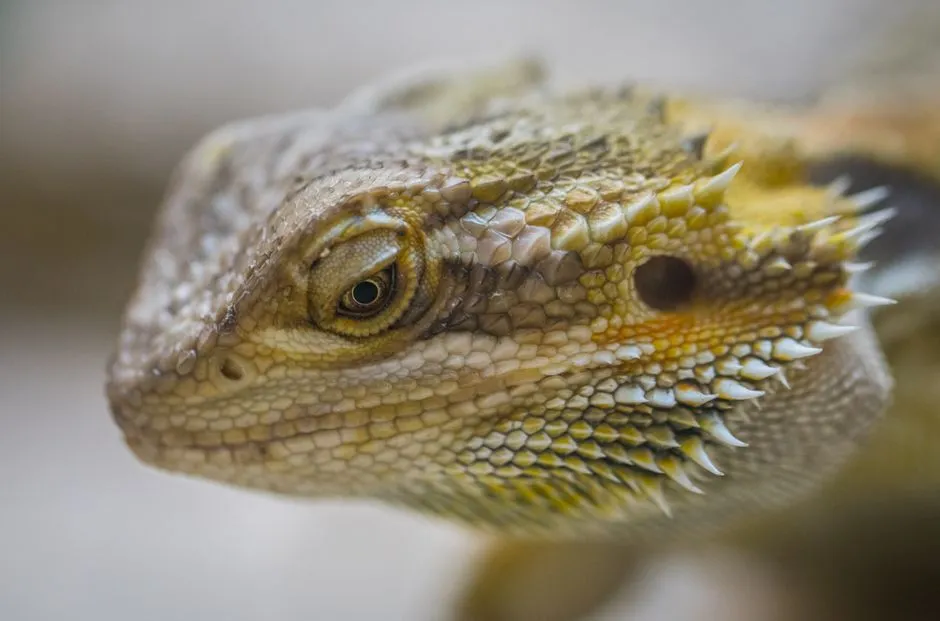
- How big should a lizard tank be?
- Use external dimensions as a first filter
- Why does floor space matter for ground-dwellers?
- Why do climbing lizards need height?
- Should you buy the adult enclosure first?
- How do you compare enclosure value on a budget?
- Test the enclosure before the lizard arrives
- Include Salmonella controls in the layout
- Sources
How big should a lizard tank be?
A lizard enclosure must meet the current adult minimum in a named care standard for the exact species, then provide the orientation, temperature and UVB gradients, hides and movement routes that species uses. There is no honest gallons-per-lizard formula. A terrestrial leopard gecko needs usable floor space; an arboreal crested gecko needs height and climbing structure; a bearded dragon needs a much larger horizontal habitat. Size for the adult before buying, unless the species standard gives a specific staged plan.
The word “tank” can be misleading. A glass aquarium, front-opening vivarium or other enclosure is suitable only when its dimensions, ventilation, security and material work for the species and its controlled environment.
Use external dimensions as a first filter
Litres and gallons describe volume. They do not tell you whether that volume is long, tall or usable after lamps, substrate, hides and branches are installed. Compare the enclosure's internal usable dimensions with the care standard, not the marketing name printed on the box.
Three current RSPCA examples show why:
| Species | Natural orientation | RSPCA adult minimum | What the dimensions must support |
|---|---|---|---|
| Leopard gecko | Terrestrial | 60 cm long × 40 cm high × 30 cm deep | Ground movement, multiple hides, warm and cool zones, a local humid hide |
| Crested gecko | Arboreal | 45 cm wide × 60 cm tall × 45 cm deep | Vertical movement, branches, cover, heat and UVB gradients, humidity without waterlogging |
| Bearded dragon | Terrestrial | 120 cm long × 60 cm high × 60 cm wide | Roaming, basking and shaded zones, hides, lighting distance and safe equipment guards |
These figures belong to those named RSPCA standards. They are not interchangeable rules for every gecko, dragon or lizard, and “minimum” is not a target to shrink. Check whether a newer national standard, veterinarian or welfare authority applies where you live.
For complete species setups, see our leopard gecko care guide and bearded dragon tank checklist.
Why does floor space matter for ground-dwellers?
A ground-dwelling lizard needs enough continuous floor area to walk, turn, choose between secure hides and move across its environmental gradient. A tall narrow box can have the same volume as a long enclosure while offering less usable ground.
Map the finished layout on the stated internal footprint. Mark the basking area, cool area, hides, water, food area and any humid hide required by the species guide. Draw clear routes between them. If the equipment leaves only a strip of exposed floor, the headline dimensions have not produced a functional habitat.
Height still matters for a terrestrial species. It must accommodate safe lamp distance, guards, substrate depth and furnishings without allowing contact with a hot surface or unguarded bulb. Follow the lamp manufacturer's installation instructions and the species standard. Do not improvise overhead electrical or structural mounting; use the documented hardware and a qualified installer where a fixed support is required.
Why do climbing lizards need height?
An arboreal lizard uses vertical space as living space. The RSPCA's crested-gecko guide calls for a tall enclosure with branches or vines and cover at different levels. Empty glass height is not enough: the animal needs stable, accessible routes and places to hide without being forced to remain beside the heat or light.
Check each branch, platform and plant against the animal's adult weight and movement. Furnishings must not shift, trap the lizard, block the door or create an uncontrolled fall onto hard equipment. Keep access to water and food workable for the individual animal.
Ventilation and humidity must work together. A taller humid enclosure still needs airflow, measured conditions and drainage that prevents waterlogging. More misting is not a substitute for a correctly built habitat.
Should you buy the adult enclosure first?
Often, buying the suitable adult enclosure once avoids paying for a short-lived intermediate tank. That works only when the species standard allows it and the enclosure can be made secure, observable and easy for the young animal to navigate.
Do not assume a large empty box is automatically better. Use enough species-appropriate cover and hides that the animal can move without crossing exposed space. Check vents, door gaps and cable ports against the smallest animal that will live there. A hatchling that can escape through adult-sized hardware does not have a secure enclosure.
Some standards give a reason to stage. The RSPCA notes that hatchling crested geckos can be more secretive and may begin in a smaller vivarium before moving up. Treat that as species-specific guidance, not permission to keep an animal in an undersized enclosure indefinitely. Write the upgrade trigger and adult enclosure into the plan before acquisition.
How do you compare enclosure value on a budget?
Compare complete systems, not bare boxes. Obtain current local costs for:
- the enclosure in the required adult dimensions;
- a secure door, vents and cable closures;
- thermostat-controlled heat, guards and manufacturer-specified fittings;
- the correct UVB system and replacement schedule;
- digital temperature and humidity instruments;
- stable hides, branches, substrate and water equipment; and
- a stand or support rated for the completed load.
We have not tested or priced particular products. A discounted enclosure that cannot hold the required environment, cannot safely accept the equipment or needs immediate replacement is not the cheaper choice.
Measure the route into the home too: doors, stairs, turns, final support and safe service access. A filled habitat can be heavy and awkward. Assemble and place it empty, use enough people and suitable handling equipment, and follow the manufacturer's lifting instructions. Do not move a live, heated or fully furnished enclosure.
Test the enclosure before the lizard arrives
Build the full habitat and operate it empty for the period required by the species standard. Record warm, cool, basking, humidity and UVB readings at the animal's level, at the relevant times of day. Test doors, locks, guards, timers and thermostat response. Confirm that the lizard cannot reach hot components and that water cannot reach powered equipment.
If the readings do not meet the named standard, fix the system before acquisition. Never bypass protective earth, open electrical equipment, splice a mains lead or guess at overhead mounting. Follow the manuals and use a qualified electrician or installer for mains or structural work.
Once occupied, unexplained weight loss, persistent refusal to eat, abnormal droppings, weakness, repeated shedding trouble or a sudden behavior change belongs with a reptile veterinarian. Do not treat a health sign by changing enclosure size alone.
Include Salmonella controls in the layout
The US Centers for Disease Control and Prevention says reptiles can carry Salmonella even when healthy. Place the enclosure and service supplies away from kitchens and anywhere human food is prepared, stored, served or eaten. Wash hands with soap and running water after touching the lizard, its food, waste or equipment and before eating or drinking.
The CDC says children younger than five should not touch reptiles or their environments and identifies older adults and people with weakened immune systems as higher-risk groups. Keep the enclosure and supplies inaccessible to young children. A tank that fits only beside the kitchen counter or in a child's unsupervised play area does not fit the household.