Crested Gecko Care: Temperature, Humidity, and Diet Basics
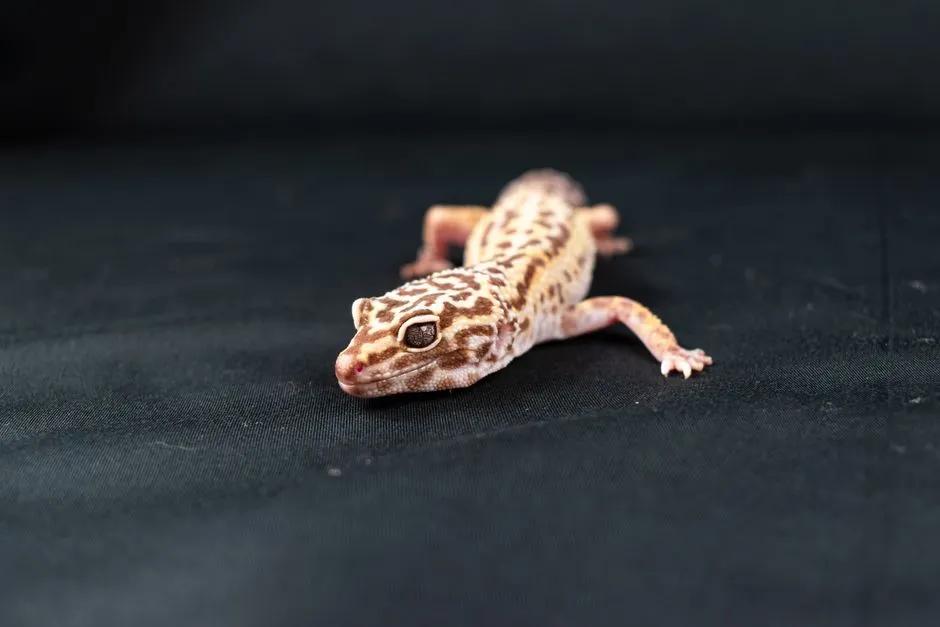
Crested Gecko Care at a Glance
Crested gecko care is simpler than most reptile husbandry, but it fails in a specific direction: keepers treat these New Caledonian forest geckos like desert lizards and cook them. A crested gecko (Correlophus ciliatus) needs cool room temperatures of roughly 72–78°F (22–26°C), a humidity cycle that swings between misting spikes and drier rest periods, a vertical enclosure with climbing cover, and a diet built around a complete powdered crested gecko diet. Get those four things right and you have one of the hardiest, longest-lived pet lizards available — many live 15–20 years in good care.
Here is the short version, before we unpack each parameter:
| Parameter | Target range | Notes |
|---|---|---|
| Daytime temperature | 72–78°F (22–26°C) | Sustained temps above ~82–85°F are dangerous |
| Nighttime temperature | 65–75°F (18–24°C) | A mild night drop is normal and healthy |
| Humidity | 70–90% after misting, drying to ~50% between | Cycles matter more than a single number |
| Adult enclosure | 18×18×24 in (45×45×60 cm) minimum, vertical | Bigger is genuinely better |
| Diet | Complete powdered crested gecko diet 2–3× weekly | Insects optional, dusted and gut-loaded |
| Lighting | Ambient day/night cycle; low-level UVB beneficial | Never a hot basking lamp aimed into a small tank |
Every number above is a range for a reason. Verify against your own thermometer and hygrometer readings — not the label on the equipment — and treat this as a starting framework, not gospel.
Temperature: The Number Everyone Gets Wrong
The single most important fact in crested gecko care is that these are cool-climate geckos. They come from humid forests on New Caledonia, an island group east of Australia, where they live in shaded foliage rather than sun-baked rock. Their comfort zone sits right around normal room temperature.
The safe range
Aim for a daytime ambient of 72–78°F (22–26°C). At night, a drop into the 65–75°F (18–24°C) range is not just tolerable but beneficial — it mirrors their natural cycle. Brief dips into the low 60s overnight are generally handled fine by healthy adults, though you shouldn't design for that.
The danger sits at the top of the scale. Sustained temperatures in the mid-80s°F and above cause serious heat stress, and prolonged exposure can kill. This is the opposite failure mode of most beginner reptiles — a bearded dragon setup is built around a hot basking zone that would be lethal in a crested gecko enclosure. Never transfer heat advice between species.
Do crested geckos need a heat lamp?
In most homes, no. If your room reliably stays between the high 60s and high 70s, ambient temperature does the job. If your home runs cold — winter rooms below about 65°F for long stretches — add a low-wattage heat source on a thermostat, positioned so the gecko can fully escape it. A small ceramic heater or low-watt bulb over one top corner of a tall enclosure creates a gentle vertical gradient: slightly warmer up top, cooler below.
Two non-negotiables if you add heat:
- Every heat source goes on a thermostat. An unregulated bulb over a small enclosure is how heat deaths happen.
- Measure with a digital thermometer at the gecko's level, not a stick-on dial. Check the warmest reachable spot, and keep it under roughly 80–82°F.
If you're keeping other species alongside your crestie — say, a leopard gecko with its warm floor zone — resist the urge to standardize equipment. The two setups should look almost nothing alike.
Humidity and Misting Schedule
Crested gecko humidity is a cycle, not a constant. In the wild, evening rain and dew push humidity very high, then things dry out through the day. Replicating that swing matters more than pinning a hygrometer to one number.
The pattern to copy
- Mist in the evening (these geckos are most active at night) until surfaces, leaves, and walls are visibly wet. Humidity should spike to roughly 80–90%+.
- Let the enclosure dry down over the following hours to somewhere around 50–60%.
- Mist again lightly in the morning if your home is dry and the enclosure is bone-dry by then. Many keepers in humid climates mist only once daily; keepers in arid homes or winter heating season often need twice.
A constantly saturated enclosure that never dries is as much a problem as a desert-dry one: chronic wetness promotes bacterial and fungal skin problems. If condensation sits on the glass all day and the substrate never lightens in color, you're misting too much or ventilating too little.
Practical humidity tools
- A digital hygrometer placed mid-enclosure. Analog dials are unreliable enough to be worthless for this job.
- A moisture-retaining substrate — coconut fiber, a soil mix, or a bioactive substrate layer — that absorbs the evening misting and releases it slowly.
- Live or artificial plants, which hold droplets your gecko will drink. Most crested geckos prefer licking droplets off leaves to drinking from a dish, though you should still provide a shallow water dish at all times.
- Ventilation. Screen tops or vented panels let the enclosure complete its dry-down. A sealed tub that stays wet forever is not a humidity win.
Signs your humidity cycle is off: stuck shed (especially on toes and tail tip) points to too dry; a persistently musty smell or skin lesions point to too wet. Stuck shed on the toes can restrict blood flow and cost a gecko its toes, so treat it promptly — a sauna-style soak in a ventilated container with damp paper towels usually helps, and a stubborn case belongs at an exotic vet.
Tank Setup: Build Vertical
Crested geckos are arboreal — they live in shrubs and trees and rarely choose the ground. Enclosure design should follow that.
Size and orientation
- Adults: an 18×18×24-inch (45×45×60 cm) vertical terrarium is the widely accepted minimum. A 24-inch-tall enclosure or larger is better, and adult geckos use every inch of well-furnished vertical space.
- Juveniles under about 10–12 grams: many keepers and breeders start hatchlings in smaller enclosures — on the order of a large kritter-keeper or small terrarium — because tiny geckos can struggle to find food in a huge space. This is a judgment call, not a law; a small gecko can succeed in a big enclosure that is densely planted with food placed predictably.
- One gecko per enclosure is the safe default. Males will fight, and even female pairs can quietly bully each other over food and shelter.
Furnishing checklist
Density is the goal. A sparse tank stresses a crested gecko; a jungle relaxes one.
- Climbing structure: cork bark rounds and flats, branches, and vines at multiple angles and heights
- Cover: live plants (pothos is a classic, hardy choice) or artificial foliage thick enough that the gecko can fully hide at several heights
- Substrate: coconut fiber, a tropical soil mix, or paper towel for simple quarantine setups; avoid loose substrate feeding stations for juveniles by using a ledge or dish
- Feeding ledge: an elevated ledge or magnetic cup holder keeps food off the floor, where an arboreal gecko is more likely to find it
- Water dish: shallow, refreshed daily, even though most drinking happens off misted leaves
Skip anything marketed as a heat rock, and skip bright hot lamps entirely. This is a shade-dwelling animal.
What Do Crested Geckos Eat?
Crested geckos are omnivores that feed on fruit, nectar, pollen, and insects in the wild. In captivity, their diet is unusually easy to get right — and unusually easy to ruin with fruit-only feeding.
The foundation: complete powdered diet
The backbone of captive crested gecko nutrition is a complete powdered crested gecko diet (often abbreviated CGD) — a formulated meal-replacement powder you mix with water into a smoothie consistency. Several well-established brands make complete versions; what matters is that the label says complete diet, not "treat" or "topper," because complete formulas are balanced for calcium, vitamin D3, and protein.
- Frequency: offer fresh CGD roughly every other day — about 2–3 times per week for adults, and more frequently (often daily or near-daily) for fast-growing juveniles.
- Serving: a small amount in a shallow cup on a feeding ledge, offered in the evening, removed within about 24 hours before it spoils.
- Expect modest appetites. A gecko that licks a thin layer off the top has eaten. Untouched-looking cups often aren't.
Insects: optional but valuable
Live insects are not mandatory when feeding a complete diet, but most geckos relish them, they encourage natural hunting behavior, and they help growing juveniles and breeding females.
- Good staples: appropriately sized crickets and dubia roaches — prey no wider than the space between the gecko's eyes
- Prep: gut-load feeders for at least a day beforehand, and dust with calcium (with D3 if the gecko gets no UVB) at most feedings
- Frequency: once or twice a week is a common, reasonable rhythm for adults
What to avoid
- Fruit purees or baby food as a staple. Fruit alone is calcium-poor and phosphorus-heavy; over time it drives metabolic bone disease (MBD) — a progressive, crippling skeletal disorder that is far easier to prevent than treat. Fruit is a treat, not a diet.
- Citrus and unripe fruit as treats; stick to soft tropical fruits occasionally.
- Wild-caught insects, which carry pesticide and parasite risk.
A gecko showing a kinked tail or spine, a rubbery jaw, tremors, or difficulty climbing needs an exotic veterinarian promptly — those are classic MBD signs, and no diet change alone fixes established damage.
Lighting and UVB
Crested geckos are crepuscular-to-nocturnal, and generations have been raised successfully without UVB on complete diets that include dietary D3. That said, current keeping practice has shifted: low-level UVB provided over a screen top, with plenty of shaded retreat underneath, is a genuine welfare benefit — it lets the gecko regulate its own vitamin D3 the way its physiology expects.
If you add UVB, keep it low-intensity and make hiding easy; if you skip it, your complete diet and D3-dusted insects are carrying that load, so don't skimp on them. The full reasoning, species-by-species, is in our reptile UVB lighting guide.
Either way, every crested gecko needs a clear day/night cycle — roughly 12 hours of ambient light and 12 of darkness. No colored night bulbs; darkness at night is the correct condition.
Handling, Shedding, and When to Call a Vet
A few realities worth knowing before they surprise you:
- Crested geckos drop their tails and do not regrow them. A startled or roughly handled gecko can autotomize its tail permanently. "Frog-butt" geckos are perfectly healthy — but handle gently, low over a soft surface, and never restrain by the tail.
- They jump. Short, calm handling sessions a few times a week suit them; they are a watch-mostly, handle-lightly pet.
- Shedding is usually invisible because they eat the shed. Finding shed skin isn't a milestone you should expect to witness.
- Vet-worthy signs: food refusal beyond a couple of weeks, visible weight loss along the pelvis and tail base, stuck shed you can't resolve, wounds, tremors, or any of the MBD signs above. Find an exotic or reptile veterinarian before you need one — general small-animal practices often can't help with geckos.
Quick Care Sheet Recap
For the keeper who scrolled straight to the bottom: keep a crested gecko at 72–78°F with no hot basking lamp, mist each evening so humidity spikes high and dries down to around 50–60% before the next misting, house adults in a vertical, densely planted 18×18×24-inch or larger enclosure, and feed a complete powdered crested gecko diet 2–3 times weekly with optional dusted insects. Measure everything with digital instruments, verify every number for your specific animal and home, and route health questions to an exotic vet. Do that, and this is one of the most forgiving reptiles you can keep.