Ball Python Tank Setup: Heat, Hides, and Humidity in the Right Order
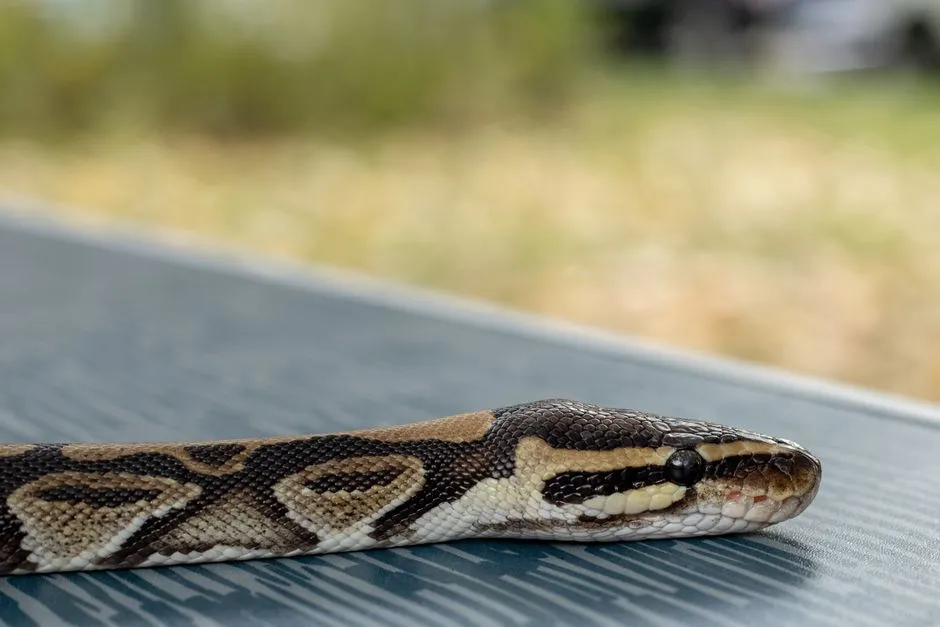
- What does a ball python need in its tank?
- How large should a ball python enclosure be?
- Where should heat go in a ball python tank?
- How many hides does a ball python need?
- What substrate works in a ball python enclosure?
- What humidity should the tank hold?
- What lighting and enrichment belong in the setup?
- What water and cleaning provisions are needed?
- How should you test the setup before the snake arrives?
- Sources
What does a ball python need in its tank?
A ball python, also called a royal python, needs a secure enclosure long enough to stretch out, a guarded and thermostatically controlled heat source at one end, measured warm and cool zones, multiple close-fitting hides, suitable substrate, fresh water, ventilation, climbing structure, a light-to-shade gradient and species-appropriate humidity. Set up every system and record stable readings before the snake arrives; do not use the animal to test the enclosure.
The order matters. Choose the enclosure for the snake’s current and expected size, install controlled heat and lighting, place hides and enrichment, add substrate and water, then run and measure the complete habitat. Decorations cannot compensate for an unregulated heat source or an enclosure that does not hold safe conditions.
How large should a ball python enclosure be?
Use the snake’s length rather than a shop label such as “starter tank.” The RSPCA says a royal python needs to stretch out fully. Its worked example gives a minimum enclosure of 120 cm long, 40 cm wide and 40 cm deep for a 120 cm snake. It also advises allowing at least one-third of the snake’s length for both width and height.
A young snake can use an appropriately sized enclosure and move into larger housing as it grows. A larger enclosure is not automatically harmful: the RSPCA explains that open, bare space is the problem and calls for plentiful cover and multiple hides. Plan the upgrade path before buying a juvenile so adult housing does not become an emergency expense.
The enclosure must close securely, resist escape, ventilate well and be made from a solid material that is easy to clean and holds heat. Inspect doors, vents, cable entries and locks from inside and outside. The snake must not be able to push through a gap, reach a hot element or become trapped behind a background.
Where should heat go in a ball python tank?
Create a thermal gradient by putting the primary heat source at one end and leaving the other end cooler. The RSPCA specifies a basking zone of 30–32°C and a cool end of 24–26°C in its royal-python guide. These are named-source figures for this species, not general snake temperatures.
Every heat source needs an appropriate thermostat, but a thermostat setting is not proof of the enclosure temperature. The RSPCA warns that thermostats are not always accurate and calls for daily measurements at the snake’s level. Use separate digital measurement at the basking and cool ends, plus an infrared thermometer where appropriate, and keep a written record while commissioning the habitat.
Heat lamps and ultraviolet lamps must have guards that prevent the snake touching a hot surface or being injured if a bulb breaks. Follow the equipment manufacturer’s instructions for the thermostat type, probe position, mounting, clearances and maximum load. Do not bypass protective earth, splice mains wiring, open electrical equipment or improvise a fitting. Fixed wiring and outlet work belong to a qualified electrician.
Place the enclosure away from radiators, direct sun and draughts because those can change its temperatures independently of the thermostat. The RSPCA calls for non-light-emitting, thermostatically controlled heat at night. Do not use a visible lamp through the night to maintain warmth.
How many hides does a ball python need?
Provide several hides across the temperature gradient, including secure choices at both warm and cool ends. A ball python should not have to choose between feeling concealed and regulating its temperature. Each main hide should be large enough for the coiled snake but close enough for its body to contact the inside surfaces.
Make the warm and cool primary hides similar in shape and security. If one is much more exposed, the snake’s location may reflect hide preference rather than temperature choice. Add cover between them so the animal can travel without crossing a completely open floor.
Include a humid hide with moist moss or another species-appropriate medium. It creates a local choice; it does not replace measuring the enclosure’s overall humidity. Position and maintain it so it stays usable without making the entire floor wet.
What substrate works in a ball python enclosure?
Choose a reptile substrate that supports humidity without remaining waterlogged or turning mouldy. The RSPCA recommends organic soils made for reptiles and advises against sand for royal pythons because it may irritate their skin. Natural leaf cover can add shelter and help retain humidity when prepared safely.
Substrate must be deep and structured enough to support normal movement without hiding persistent waste or damp patches from daily inspection. If mould develops, treat it as evidence that moisture and ventilation are not balanced. Remove affected material and correct the cause rather than covering it with fresh substrate.
Paper towel can make observation easier during a veterinarian-directed quarantine or initial health-monitoring period, but a sparse temporary surface is not a complete permanent habitat. Confirm quarantine and substrate choices with a reptile-experienced veterinarian, especially when other reptiles live in the home.
What humidity should the tank hold?
The RSPCA gives a normal cool-end humidity of around 50–60% for royal pythons and describes temporary increases to around 80%, allowing humidity to fall between them. Constantly high humidity can encourage bacteria and mould when ventilation is insufficient. A single momentary reading does not describe the daily pattern.
Use a hygrometer positioned for the measurement described by the care guide, record the normal rise and fall, and check the enclosure after adding water, changing substrate or altering ventilation. Our ball-python humidity guide explains how to interpret low, high and unstable readings without turning the habitat into a wet box.
Humidity problems should be corrected through measured enclosure variables, not by repeatedly spraying without checking the result. Wheezing, open-mouth breathing, gasping, discharge, repeated incomplete sheds or other health changes need prompt advice from a reptile-experienced veterinarian.
What lighting and enrichment belong in the setup?
Create a light-to-shade gradient with the brighter area toward the warm end. The RSPCA specifies a UV Index gradient from 1.0 at the basking area to zero in shade for a typical royal python. It gives a lower maximum of 0.7 for some morphs such as albinos. Exact lamp strength, distance and replacement timing depend on the product, enclosure and animal; follow current manufacturer instructions and consult a reptile veterinarian about light-sensitive morphs.
All lights go off at night. The RSPCA describes a 12-hours-on, 12-hours-off schedule in its care guide, while non-light-emitting controlled heat maintains any required night temperature.
Add sturdy branches and other structures that support the full weight of this heavy-bodied snake. Secure them against rotation or collapse before the animal enters. Keep routes clear of lamp guards, door mechanisms and narrow gaps. Enrichment should add choices without creating a fall, crush or entrapment hazard.
What water and cleaning provisions are needed?
Place a stable dish of clean, fresh water at the cool end. The RSPCA says it should be large enough for the snake to bathe and that the water should be replaced at least daily, or sooner when fouled. Check that the filled dish cannot tip and flood the substrate.
Plan access for daily waste removal and safe periodic cleaning before filling the enclosure. Use a reptile-safe disinfectant according to its label, rinse as directed and never mix cleaning products. Move the snake to a secure temporary container during work that requires the enclosure to be open.
Reptiles can carry Salmonella while appearing healthy. The US Centers for Disease Control and Prevention advises handwashing with soap and water after touching reptiles, their food, waste, equipment or habitat. Keep the animal and its supplies away from kitchens and any food-preparation sink. The CDC names children under five, adults aged 65 and older, and people with weakened immune systems as more likely to get sick from reptile-associated germs, and advises households with young children to consider a different pet.
How should you test the setup before the snake arrives?
The RSPCA advises running the enclosure for a week before introducing the royal python. During that week, record warm-zone temperature, cool-zone temperature and humidity at consistent times. Test the day/night cycle, door security, lamp guards, thermostat response, water-dish stability and the accessibility of hides without an animal present.
Resolve unstable readings before acquisition. When the snake arrives, allow it to emerge from its transport container into the enclosure, secure the door and minimize unnecessary handling during the first week. Keep observation quiet and record feeding, waste, shedding and weight without repeatedly lifting hides.
If the tank cannot hold the named ranges without constant intervention, the setup is not ready. Correct the enclosure, equipment or room placement first, using manufacturer guidance and qualified help for electrical or structural work.