What Do Pet Lizards Eat? A Species-First Guide
- What do pet lizards eat?
- Start with a species card, not a generic menu
- Which common lizards eat insects?
- What does gut-loading mean?
- Which lizards eat plants?
- Which lizards eat both insects and plants?
- How often should you feed a pet lizard?
- When does appetite need a reptile vet?
- Keep reptile food away from human food
- Sources
What do pet lizards eat?
Pet lizards do not share one diet. A leopard gecko is primarily an insect-eater, a green iguana is a leaf-eating herbivore, and a bearded dragon eats both insects and plants, with the balance changing as it grows. Identify the exact species and life stage first, then use a current veterinary or welfare care standard to choose foods, portions, supplements and frequency. Persistent refusal to eat or weight loss belongs with a reptile veterinarian.
That species-first answer matters more than anything on the feeder-shop shelf. Two animals that both look like “small lizards” can need fundamentally different food. A mixed bowl assembled from general reptile advice can be inadequate for one species and inappropriate for another.
For complete beginner routines beyond feeding, see our leopard gecko care guide and bearded dragon setup checklist.
Start with a species card, not a generic menu
Before buying food, write down:
- the accepted common and scientific name;
- age or life stage;
- current weight and any recent weight trend;
- the named care standard you are following;
- the veterinarian-approved supplement plan; and
- the foods actually offered and eaten.
If the seller's label says only “gecko,” “dragon” or “iguana,” get a positive identification before improvising. Ask the breeder, rescue or a reptile veterinarian for records. A photograph may help a professional, but it does not turn a broad shop label into a feeding plan.
The enclosure matters too. Digestion, appetite and calcium use are tied to species-appropriate heat and lighting. A feeding article cannot compensate for an unmeasured habitat, so check the animal's named husbandry standard alongside its diet.
Which common lizards eat insects?
Leopard geckos are the clearest beginner example. VCA Animal Hospitals describes them as feeding primarily on live, moving insect prey and names commercially raised crickets among suitable options. Variety matters, and feeder size, frequency and supplementation must come from the care standard for the animal's age and setup.
Buy captive-raised feeders from a reputable supplier. Do not collect insects from a garden or roadside: VCA warns that wild-collected insects may carry fertilizer or insecticide residues. Remove uneaten live insects according to the species guide so they do not remain in the enclosure and trouble the lizard.
Insect-eating does not mean “mealworms forever.” Different feeders have different nutritional profiles, and high-fat feeders may be limited by a care standard. Record what was offered and what remained instead of estimating from an empty tub later.
What does gut-loading mean?
Gut-loading means feeding a formulated, nutrient-targeted diet to feeder invertebrates before offering them to the reptile. The RSPCA explains that the nutrients inside the feeder are then passed to the lizard. It recommends a formulated gut-loading diet for 24–72 hours before feeding, while individual species guidance may specify a different window. That difference is a reason to follow the selected species standard, not average the numbers.
Keep feeders in a ventilated container and provide food and water in a form that does not create a drowning hazard. Treat feeder care as part of the lizard's diet, not storage between purchases.
Gut-loading and dusting are separate steps. Dusting coats food with a measured supplement immediately before it is offered. Calcium, vitamin D3 and multivitamin needs depend on species, age, diet and UVB setup. Too much can be harmful. Use the exact product label and the supplement schedule supplied by a reptile veterinarian or named care standard; do not combine several powders because each sounds useful.
Which lizards eat plants?
Green iguanas are herbivorous and primarily leaf-eating. VCA's iguana feeding guide puts dark leafy vegetables at the centre of the diet and treats fruit as a small portion, not the main meal. It also warns against using dog or cat food as an iguana diet.
This is not a template for every plant-eating lizard. The safe plant list, preparation, calcium balance and feeding schedule remain species-specific. Wash produce under clean running water, discard spoiled material, and remove uneaten fresh food before it deteriorates in the warm enclosure. Do not use decorative flowers or outdoor plants unless their identity and chemical exposure are known to be safe for that exact species.
“Vegetarian” is not enough detail. A bowl dominated by watery lettuce or sweet fruit may look fresh while missing the structure of the named diet. Use the proportions and rotation in the current care sheet rather than building a menu from the animal's apparent favourites.
Which lizards eat both insects and plants?
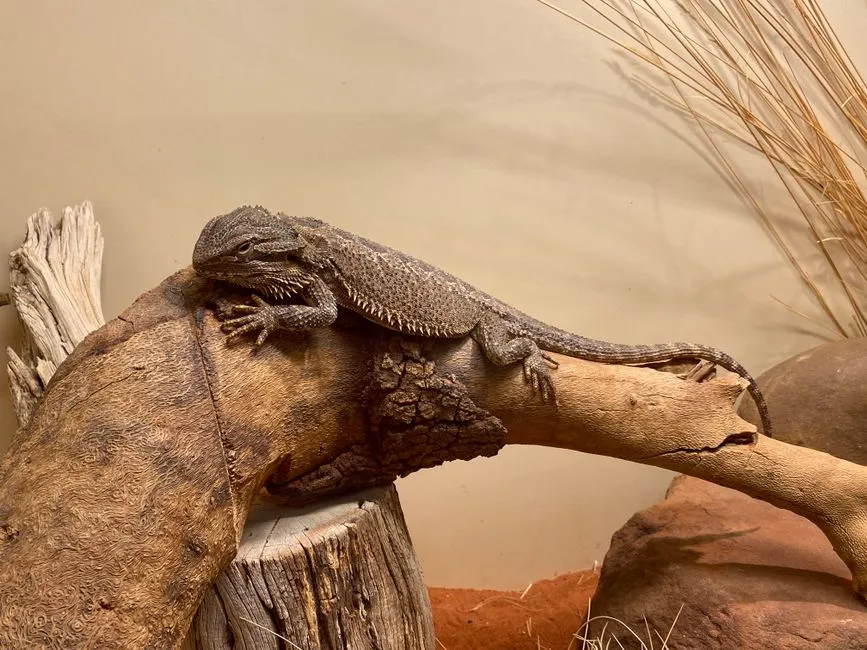
Bearded dragons are omnivores. VCA notes that young, growing animals tend to eat more animal material while adults tend to be more plant-focused. Its current guide describes a varied diet of insects and plant foods, and it tells owners to discuss the precise diet with a veterinarian because age, weight and health change the plan.
That shift is easy to miss. A juvenile menu should not continue unchanged simply because the animal still accepts it. Review the life-stage plan at routine veterinary visits and update the written feeding card when the guidance changes.
Offer plant foods in a clean, stable dish. Keep insect feeders and produce preparation separate from human food work. Never assume that a food accepted by one omnivorous species is safe for another.
How often should you feed a pet lizard?
There is no responsible universal schedule. VCA's current pages give different frequencies for leopard geckos, bearded dragons and iguanas, and the schedule also changes with age, body condition, health and breeding status. Copy the frequency from the named care standard for the exact animal, then have a reptile veterinarian adjust it when the animal's weight or health requires that.
Use a simple feeding log:
| Date | Food and measured amount | Supplement used | Amount eaten | Weight or behaviour note |
|---|---|---|---|---|
| Monday | Record the actual items | Record the exact product | Record leftovers | Note only observable changes |
Weigh the lizard with suitable equipment at a consistent interval recommended by the vet. A log shows whether “picky” means one missed item, a steady decline or a preference within an otherwise complete diet.
When does appetite need a reptile vet?
Contact a reptile veterinarian for persistent refusal to eat, ongoing weight loss, repeated regurgitation, marked lethargy, swelling, weakness, abnormal droppings or difficulty taking food. Seek prompt care for a rapidly worsening animal. Do not force-feed, change supplement doses or give human or leftover veterinary medicines unless the reptile veterinarian directs it for this animal.
Bring the species card, weight log, food and supplement labels, enclosure temperature and humidity records, and lighting details. Those facts are more useful than a guess about mood.
Keep reptile food away from human food
The US Centers for Disease Control and Prevention says reptiles can carry Salmonella even when they look healthy. Wash hands with soap and running water after feeding the lizard, touching its food or handling habitat equipment, and before eating or drinking. Keep reptiles, food, dishes and enclosure equipment out of kitchens and other places where human food is prepared, stored, served or eaten.
The CDC says children younger than five should not handle or touch reptiles, amphibians or their environments because they are at higher risk of serious illness. It also identifies adults over 65 and people with weakened immune systems as higher-risk groups. In a home with a young child, discuss whether a reptile is an appropriate pet and keep the feeding area inaccessible; indirect contact with contaminated equipment still matters.